Aspen (Populus tremula):
Aspen, the remedy for unknown, vague fears, is prepared by the boiling method using both male and female catkins on flowering twigs.
The bark is sometimes green-grey due to the presence of chlorophyll, the iron-containing pigment which harvests the energy necessary for photosynthesis. Photosynthesis in the bark varies seasonally and is most important during periods when there are no leaves. The bark has diamond-shaped pores called lenticels which allow gases to flow in and out. It is an important host for some species of lichen.
The bark also contains salicylates (also found in birch and willow trees) and the related compound populin, the benzoate derivative of the salicylate precursor salicin.
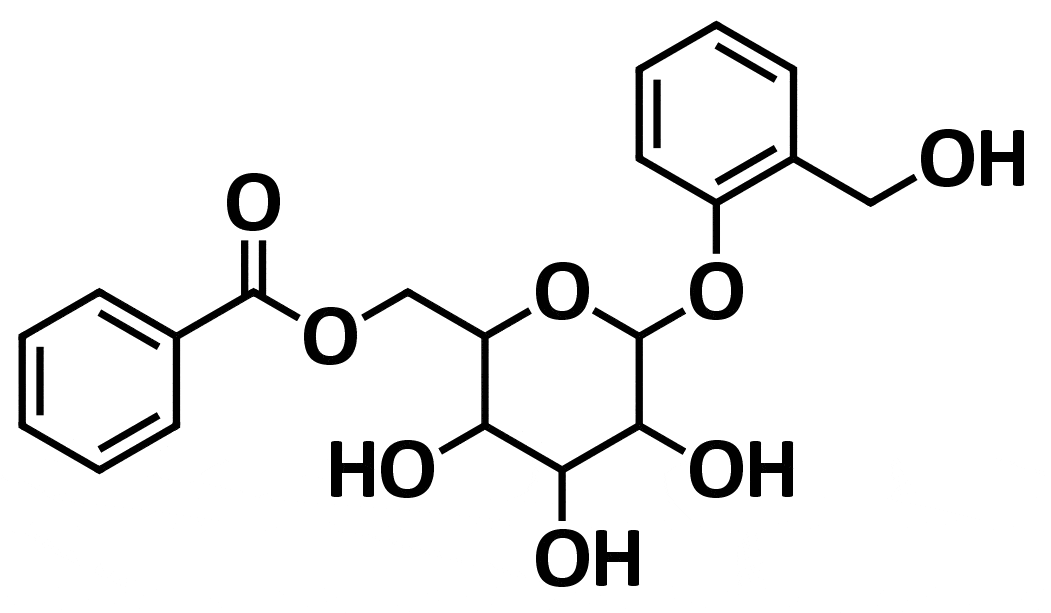
Chemical structure of populin
Aspen bark was traditionally used to treat intermittent fever (or agues), probably related to the presence of these compounds. Salicylates are still used medicinally today, in the form of acetyl salicylic acid or aspirin.
Leaf stalks, or petioles, are flattened and flexible near the leaf blade, allowing them to flutter, giving the tree its characteristic tremble or shiver. It may have been this which suggested the use of the tree to treat agues, sufferers from which often shivered.
One traditional name for the tree is langues de femmes or women’s tongues, likening its tremble to gossiping women who are never still. In fact, historically, Satan was said to have given women speech by putting aspen leaves in their mouths! The tree was believed to shiver as its wood was used to make the Cross, and it was the only tree which did not bow its head during the procession to Calvary.
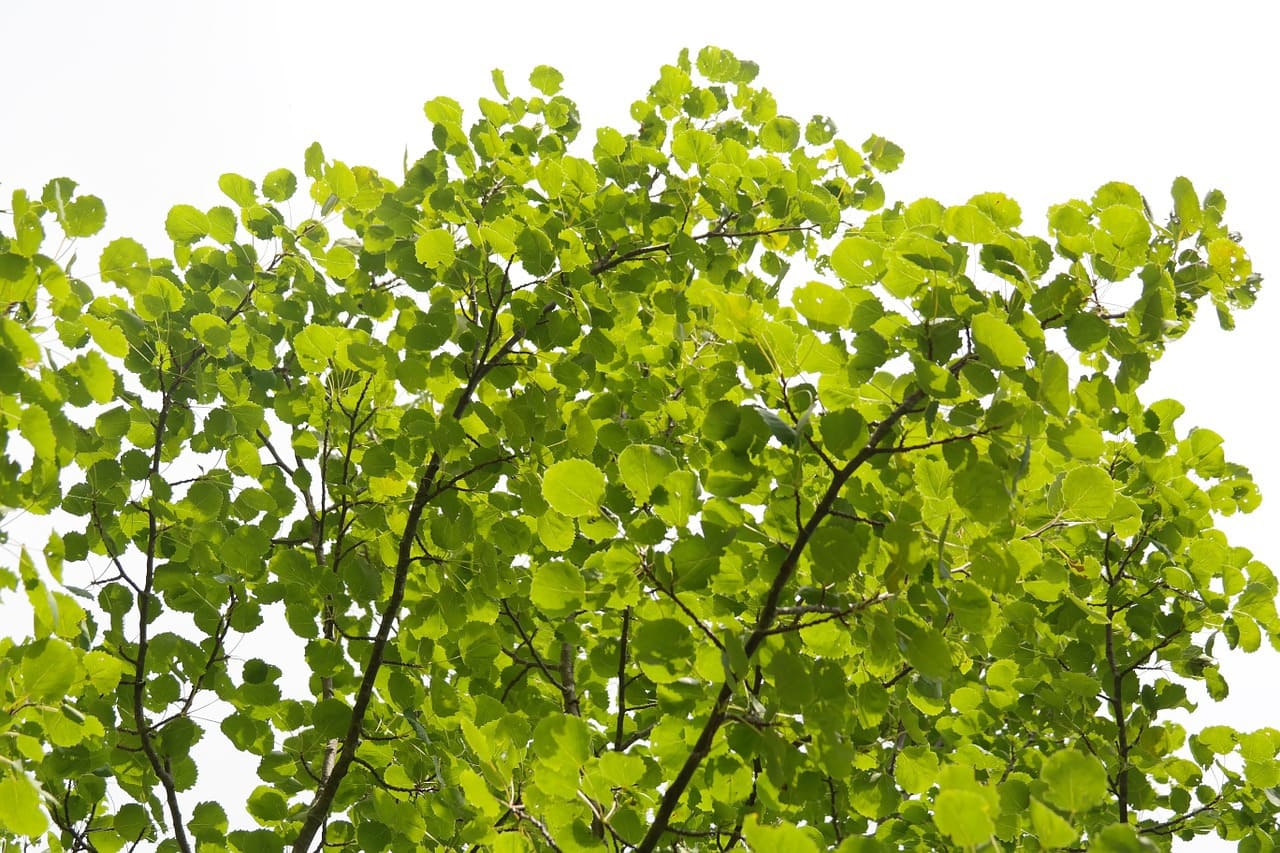
Aspen leaves; photo from pixabay.com
Although in some places the tree was thought to be cursed, it was believed by others to be blessed and aspen wood was sometimes used to make teething rings. An aspen tree planted at the door of a house was said to offer protection from thieves. A crown made of aspen leaves was thought to provide its wearer with protection when visiting and returning from the Underworld and crowns were sometimes found in ancient burial sites.
Aspen wood is used to make oars, paddles and surgical splints and formerly was used in shields. The Greek word aspis, meaning a round shield, gave the tree its name.
For an introduction to this series of blogs or sources and more info. click links.