Cherry Plum (Prunus cerasifera):
Cherry plum, the remedy for fear of losing control, is make by the boiling method.
Cherry plum is one of the parents of the hybrid domesticated plums, including damsons and greengages (Prunus domestica which are Prunus spinosa x Prunus cerasifera). The trees are among the first to flower in spring.
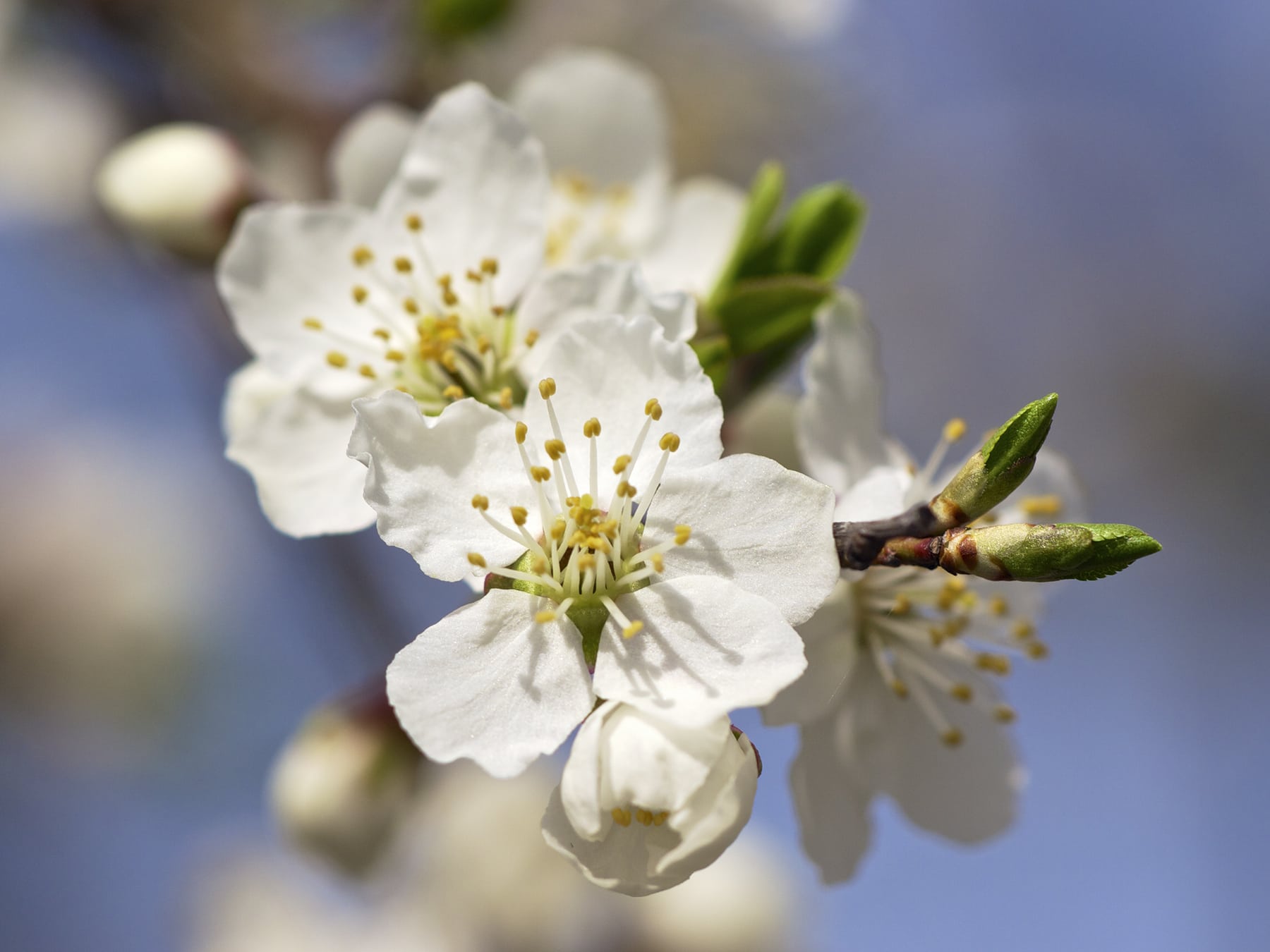
Cherry Plum; photo courtesy of Jorg Hempel
Fruit is often used to make jam or fermented to make wine. When jam is made, the fruit is gently boiled, releasing pectin from the cell walls. Pectin occurs in the skin and cores of the fruits, where it helps form the structure. It was first isolated in 1825 by the chemist Henri Braconnot and consists of long chains of sugar molecules. Table sugar is now added to the fruit and this interacts with water molecules which would inhibit pectin chains from bonding to each other. Acid (in the form of lemon juice – mainly citric acid) is also added to help prevent ionisation of the pectin chains to form carboxylate groups which would repel each other.
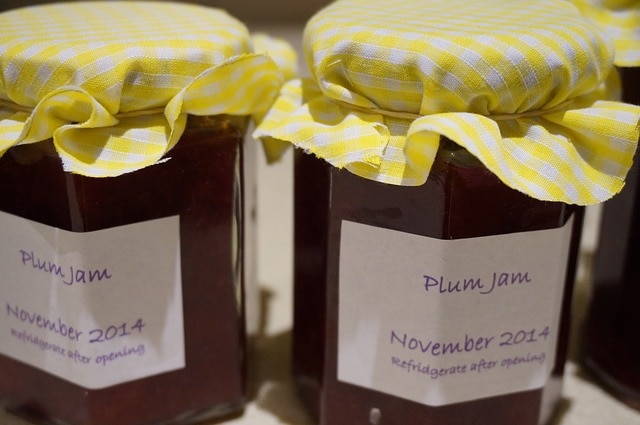
Plum jam; photo pixabay.com
When pectin chains bond to each other, a gel is formed which traps the liquid and causes the jam to set. The pectin network forms at 104oC, the setting point of the jam. As well as sweetening the jam and helping it set, sugar also acts as a preservative by keeping the water content too low for microbes to grow. Pectin (from the Ancient Greek for congealed) is also used as a thickener for other foods and in the pharmaceutical industry as a carrier for drugs. It can be used to help blood clot more quickly and to reduce cholesterol.
Seeds and leaves of many species from the genus Prunus, including plums and apricots, contain the compound amygdalin. This metabolises in the human gut to produce sugar, benzaldehyde and hydrogen cyanide, a potent toxin. This has led to some cases of cyanide poisoning where patients have taken amygdalin as a treatment for cancer.
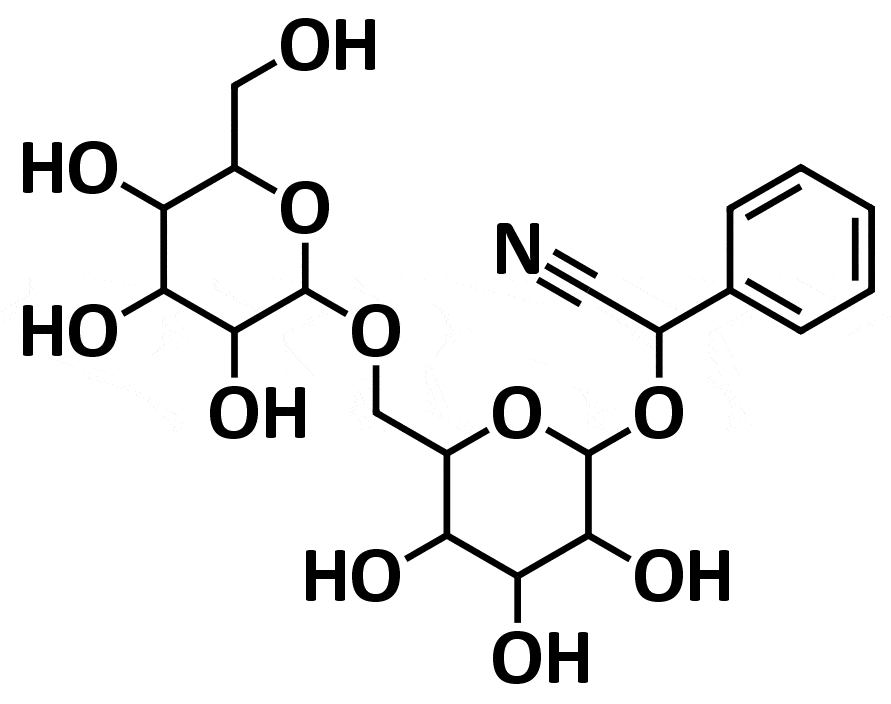
Chemical diagram of amygdalin
Although used historically in Russia, China and USA as a cancer remedy, this was largely discontinued due to its toxicity. In spite of this, it is still advocated by some people. Hydrogen cyanide, also known as prussic acid, smells like almonds and is used as a starting material in the synthesis of many other chemical compounds as well as a pesticide and chemical warfare agent. The quantity produced by ingestion of even the most amygdalin-rich seeds is unlikely to cause any harm – estimates suggest a 70 kg person could consume 1 kg of peach seeds (from Prunus persica) a day safely.
For introduction or sources and more info., click the links.